
Influential people: Sidney and Lois Eskenazi
The Eskenazis have funded a long list of projects, from the Sidney and Lois Eskenazi School of Art, Architecture & Design, to battles against diabetes. Their crown jewel is Eskenazi Hospital.
To refine your search through our archives use our Advanced Search
The Eskenazis have funded a long list of projects, from the Sidney and Lois Eskenazi School of Art, Architecture & Design, to battles against diabetes. Their crown jewel is Eskenazi Hospital.
It’s hard to think of an important Indianapolis event that Morris didn’t have a hand in.
Four decades ago, “it felt like tumbleweeds rolled down Washington Street.” But aggressive moves to build the city skyline, develop hotels and create more places to live led to a transformation of downtown.

The city’s sports landscape was sparse, indeed, in May 1980. That was before the city adopted a sports strategy that led to the Pan Am Games, the NCAA and Indianapolis Colts moving to the city, and a string of high profile events including the Super Bowl and several Final Fours. Today, the city is a sports powerhouse.
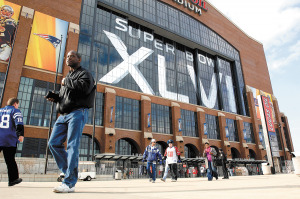
Positioning an NFL stadium as both a sports facility and convention venue became a major advantage for Indianapolis, leading to almost four decades of using tourism to fuel economic growth.
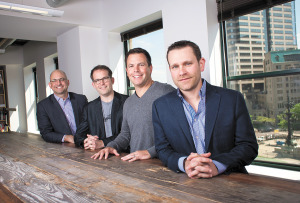
By building innovative marketing-software startups since the mid 1980s, top Indianapolis entrepreneurs have created thousands of jobs and made hundreds of millions of dollars for themselves, their investors and colleagues.
Forty years ago, Hamilton County’s suburbs were viewed as little more than northern extensions of Indianapolis. Today, they are destinations all their own.

Change is too small a word for what has happened on the dining and cultural scene in Indianapolis over the last 40 years.

We can and we will do big things—if we commit ourselves to creating the collaboration and systems that are needed to accomplish such a task.
Indianapolis could expand the “Circle City” identity by complementing Monument Circle with additional urban halos marking important intersections and landmarks.
Central Indiana can become the most equitable metropolitan region in the United States—where disparities are minimal, power is shared, and human potential is nurtured and unleashed.
Rather than isolated behind a fence, neighborhood streets could be reconnected to the outside. Rather than spending $50 million on a deluxe swine barn, we could build parking garages along the planned Blue and Purple lines to drastically reduce the more than 100 acres of surface parking.
The path out of poverty includes moments of financial insecurity for so many. States like Illinois, Ohio, Massachusetts and New Mexico are already making great strides to support families in these situations.
Building more sidewalks, closing Monument Circle to traffic, and creating tiny-house villages are among the ideas readers submitted to improve Indianapolis.
Camp Mariposa is an addiction-prevention and mentoring program for youth affected by a family member’s substance use disorder.
It isn’t mandatory to have mountains or an ocean to have a fitness culture. You just decide to do it.
Community health workers build individual and community capacity by increasing self-sufficiency and health knowledge through activities such as outreach, community education, informal counseling, social support and advocacy.
Making mental health treatment a community priority, planting gardens at libraries and publicizing community health stats are ideas readers suggested for improving health in central Indiana.
Rather than “smart city” being used as a buzzword to generate grant dollars by businesses that need to win city contracts, what if the concept actually delivered on the promise of improving lives?
What’s at stake is both the health and well-being of our community and the economic prosperity of our workforce.