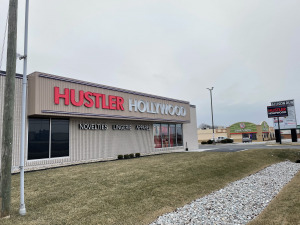
Lawmakers consider statewide restrictions on the location of sexually-oriented businesses
House Bill 1122 would prohibit a registered sexually-oriented business from operating within 1,000 feet of a facility that caters to minors.
The Indiana Chamber of Commerce is again calling for legislation that it says would remove some of the local hurdles such projects now face.
At least 19 states, including Indiana, have this year restricted state or local authorities from safeguarding public health amid the coronavirus pandemic.
The clock is ticking for officials to decide whether they’ll raise local income taxes to pay for a $45 million to $50 million jail expansion and justice center to alleviate overcrowding.
An Indianapolis City-County Council committee on Tuesday unanimously voted to advance a plan allowing public employees’ wages to rise with inflation, as work continues on the city’s first public pay scale change in more than a decade.
The amount dedicated to building a 296-space, three-story parking garage servicing the city’s new police station and other adjacent users has grown from $8 million to a projected $11.5 million.
The Democratic-majority council passed the measure 19-5, along party lines, with Republicans opposed because the order didn’t fully lift all capacity limits for businesses.
Zionsville Mayor Emily Styron filed the lawsuit in March after the town council unanimously denied her request to demote Zionsville Fire Department Chief James VanGorder.
Officials still plan to seek City-County Council approval to lift mask mandates for fully vaccinated people on June 7 and hope to further ease other restrictions if the county can reach a 50% vaccination rate by July 4.
Former Muncie Mayor Dennis Tyler, 78, admitted to receiving $5,238 to steer Public Board of Works contracts to an unnamed company.
Indianapolis Mayor Joe Hogsett said the county was waiting until June 7 to allow more time for people to be vaccinated and for big events such as the Indy 500, proms and graduations to take place under more restrictive conditions.
Indianapolis Mayor Joe Hogsett said Thursday he plans to take a “common sense approach” to determining when the city will lift its restrictions through continued conversations with the Marion County Department of Public Health.
The measure limits total fees to no more than 20% of a meal’s price. It also prohibits third-party delivery services from attempting to make up lost fees by passing costs on to drivers or customers.
The funding is part of an overall $1.9 trillion bill that could send as much as $5.87 billion to the state, including roughly $237 million to Indianapolis and another $187 million to Marion County.
The federal government is proposing to downgrade 144 cities in all from the metropolitan statistical area designation, which some areas fear will affect federal funding and their ability to lure businesses and talent.
Some councilors have concerns about what the bonds would be spent on—including public art—while others worry the city’s plans to acquire more properties would harm small businesses.
The House Rules and Legislative Procedures Committee on Thursday amended a bill to create what would be called an “emergency session,” which would allow lawmakers to convene at any time during a statewide emergency.
According to Ambrose, the sale resolves the year-long legal dispute between the developer and the city of Indianapolis that started after the company withdrew from the $1.4 billion Waterside development agreement involving the 103-acre property west of downtown.
The program, which opened in July to help tenants avoid eviction during the pandemic, has provided more than $26 million in federal money to more than 12,000 households.
Cities and states are trying to avoid full-blown lockdowns by enacting almost every other kind of restriction: nighttime curfews, bar closures, stricter mask mandates, and 10-person gathering limits, for example.