

Marian University plans new engineering school with $24 million gift
The Indianapolis university said it was halfway to its $50 million fundraising goal for the school after a $24 million gift from the Witchger family and other donations.
The Indianapolis university said it was halfway to its $50 million fundraising goal for the school after a $24 million gift from the Witchger family and other donations.
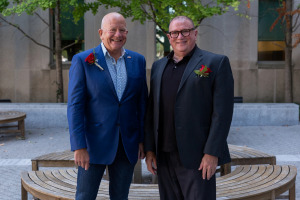
In honor of their contribution, the atrium in Lawrence W. Inlow Hall, the law school building, will be name the Steve Tuchman and Reed Bobrick Atrium.
The Indianapolis-based private foundation on Monday announced the gifts, which range from $1 million to $5 million and were made to 38 colleges and universities.
As difficulty accessing food becomes more prevalent throughout Johnson County, and as more and more people take an interest in local food, a group of like-minded residents are banding together to address a growing problem.
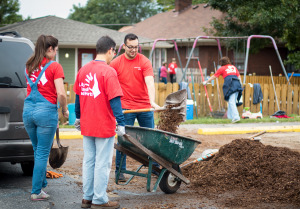
It’s a big pivot for organizations that traditionally create high-visibility fall projects to call attention to volunteerism and community service. In the process, they help dozens of neighborhood groups and scores of not-for-profits, from the United Way of Central Indiana to Keep Indianapolis Beautiful.
Rose-Hulman, which offers the country’s top-rated undergraduate engineering program, said the gift was among the largest individual donations in institute history.
The former financial coordinator of a charitable foundation operated by women’s fraternity Zeta Tau Alpha has been sentenced after pleading guilty to embezzling about $450,000 from the organization.
Immigrants disproportionately represent the state’s essential workforce and are simultaneously concentrated in industries that are especially vulnerable to the economic recession caused by COVID-19.
The Indianapolis-based philanthropic giant saw its assets increase to nearly $17 billion in 2019.

The redevelopment will exacerbate a challenge already weighing on Marion County: huge swaths of land off the tax rolls because they are owned by not-for-profits and are being used for purposes related to the groups’ missions.

For weeks, camps of people experiencing homelessness and those suffering from substance use disorders have settled in on Monument Circle and near City Market.
Unmet needs are cascading as the pandemic brings them to the surface, says Major Marc Johnson, commander of The Salvation Army’s Indiana division.
Sean Shelby will join Liberty Fund on Aug. 31, succeeding CEO and President Emilio Pacheco, who has led the organization since 2016.

Seventy percent of not-for-profits in Indiana have reduced programs or limited capacity since the coronavirus pandemic hit the state, according to a recent report.
The lab was announced several months ago as a project by the Indianapolis eLearning Fund, which was formed to support teachers in Indianapolis as they transitioned to eLearning. The fund contributed $1.6 million to developing the lab, which is now up and running.
Jrue Holiday and his wife, Lauren, a former U.S. national team soccer player who was born and raised in Indianapolis, plan to donate about $5 million to social justice causes.
The Indianapolis-based Lilly Endowment Inc. on Tuesday announced plans to dedicate up to $20 million to organizations serving youth populations during the ongoing public health crisis.

Four years ago, CICF and the Indianapolis Foundation launched a pilot program to try to diversify local not-for-profit boards. Here’s the impact.
The John M. Mutz Philanthropic Leadership Institute is designed to build the pipeline of diverse talent in philanthropy so the sector will have strong leaders for years to come.
The Indy Arts & Culture Restart & Resilience Fund, underwritten by Lilly Endowment Inc., will provide eligible entities with one-time grants ranging from $5,000 to $500,000.