Flood-damaged Indianapolis homeowners face costly choice
Months after devastating August floods, some homeowners face a costly choice: Spend thousands of dollars to elevate their homes or tear them down.
Read More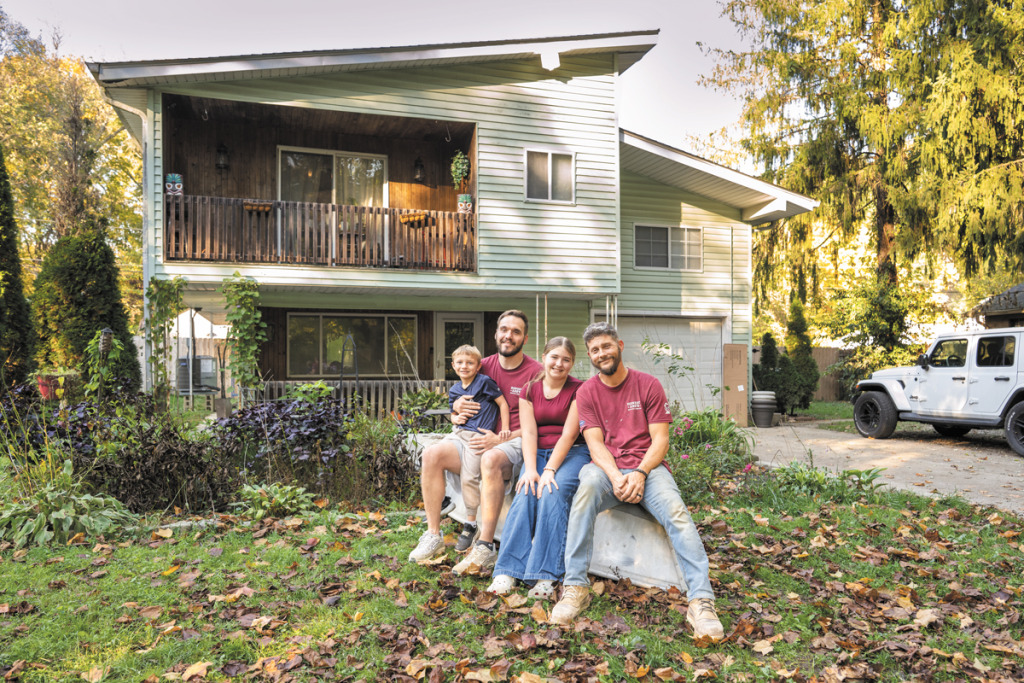
Months after devastating August floods, some homeowners face a costly choice: Spend thousands of dollars to elevate their homes or tear them down.
Read More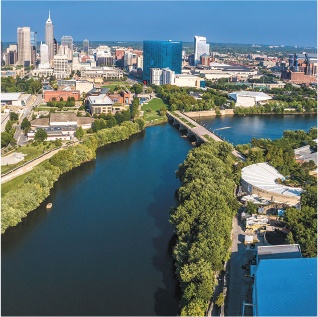
City leaders and stakeholders have held discussions about the riverfront in recent years and even traveled to other cities and countries to learn how they’ve developed their riverfronts, but plans for Indianapolis have repeatedly fallen by the wayside.
Read More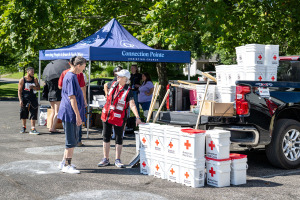
Rocky Ripple officials say this month’s flooding made it clear just how critical it is that the small town just northwest of Butler University replace its earthen levee with stronger flood protection.
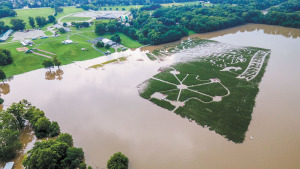
Cleanup has only just begun for the thousands of Hoosier residents and businesses affected by widespread power outages and flooding.
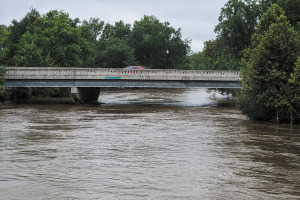
The flooding, which surpassed records set in 1913, swamped multiple economically depressed portions of Noblesville and the county’s unincorporated areas.
Gov. Mike Braun was expected this week to request a major disaster declaration from President Donald Trump, but it could take weeks or months for that to be approved.

The Indianapolis Board of Public Works voted unanimously on the name Wednesday afternoon.

The project will add two miles of new trails, plant 400 trees and restore wetlands as part of a larger effort to reinvest along the White River.
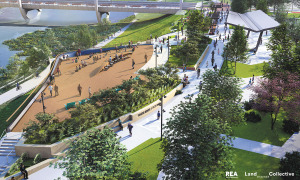
The park will expand into 15 acres between the White River and Elanco Animal Health’s new headquarters and will include an event pavilion to be developed inside the remnants of a former crane bay that had been part of the original stamping plant.

A 26-person contingent comprising state and city officials, not-for-profit leaders and business executives traveled to the tiny city-state Nov. 14-17 to study how the nation has developed land along its waterfront.

Indianapolis officials say they are preparing for more severe weather in the years to come as climate-change events threaten to overwhelm the stormwater drainage system and pose other problems.

The IEDC has acquired thousands of acres of land in Boone County for the LEAP District, a planned advanced manufacturing and high-tech district in the Lebanon area.

Community leaders and volunteers are working to turn a site that was once a swimming hole on the White River for Black Indianapolis residents into a year-round destination.

The Indianapolis Department of Public Works says work on the bridge will halt if remains are found during construction, and it plans to have an archaeologist on site during construction who would flag signs of burial. But critics are seeking an archeological dig first.

An Indiana environmental group says the utility is pumping more than 1 million gallons of contaminated water a day into the river from coal ash ponds at its Eagle Valley Generating Station in violation of the federal Clean Water Act.

The trail will wind and curve near the White River for 5.4 miles from East 116th Street to East 146th Street once it is completed next year.
The group is launching an annual fundraising campaign to help pay for gravel parking lots, access roads, signage, security lighting and cameras, and boat ramps for areas along the White River in Hamilton, Marion and Morgan counties.

Several Indianapolis-based groups are hoping to turn a spot on the White River into an outdoor recreational hub that includes a boat ramp, a parking lot and a smattering of event spaces.
Government leaders in Anderson, Carmel, Fishers, Indianapolis, Noblesville, Westfield, and Hamilton and Madison counties, have joined together to secure funding for redevelopment and economic investment projects along the White River.
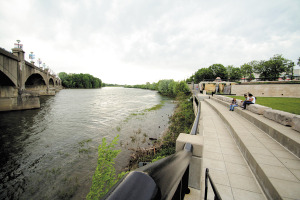
Improving a 58-mile stretch of the White River and taking advantage of the natural resource that flows through the Indianapolis area has been on local leaders’ wish list for years.

Visit Hamilton County launched a feasibility study Thursday to determine the best way to align the county’s River Road Park, Carmel’s River Heritage Park and Conner Prairie as a river-centric district.

A firm charged with drafting a plan to revitalize and activate the river in the two counties has unveiled a series of concepts that include both passive and active nature experiences.