

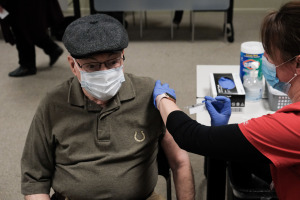
Hoosiers age 80 and older turn out by the hundreds for COVID-19 shots
The Indiana Department of Health said more than 86,000 Hoosiers aged 80 or older had registered as of 4 p.m. Sunday for vaccinations.
The Indiana Department of Health said more than 86,000 Hoosiers aged 80 or older had registered as of 4 p.m. Sunday for vaccinations.
So far this month, drugmakers have hiked prices on 636 drugs, according to research by GoodRx, which tracks prescription drug prices and offer a mobile app to help consumers find the lowest prices on hundreds of drugs.

The experimental drug, donanemab, could be a huge breakthrough for Lilly, which has spent billions of dollars over 30 years researching treatments for Alzheimer’s disease, only to see them fall short in clinical trials.
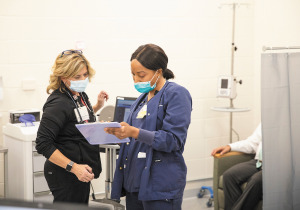
For a highly touted drug meant to keep throngs of people out of hospitals during a pandemic, Eli Lilly and Co.’s wonder treatment bamlanivimab sure has been slow to catch on.
The Indiana Department of Health said Friday morning that the website and the alternate 2-1-1 phone registration system were working but urged Hoosiers to be patient if put into holding queues.
Hoosiers 80 and older account for 3.8% of the state’s population but more than 19% of hospitalizations and 52% of COVID-19 deaths.
The state’s new dashboard on COVID-19 vaccines provides interesting breakdowns on who is getting vaccinated, by county, by gender, by race, by age and a host of other statistics sure to please any proud data geek.
A three-year educational and marketing effort in Indiana called “Know the Facts” aims to build interest through simple, understated messages on billboards, buses, broadcast commercials and social media.
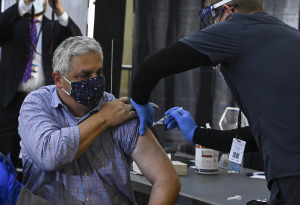
State health officials shared some new information and a few details during Gov. Eric Holcomb’s weekly press briefing on Wednesday.
Vice President-elect Kamala Harris took up Dr. Moore’s cause on Tuesday, saying the complaints of Black women are “often downplаyed or ignored in our health care system.”
The 39 companies that won venture funding represent a wide range of therapeutics, devices and health information technology.
Indiana received 55,000 doses of the Pfizer vaccine on Friday, and another 39,000 doses on Monday, which is a fraction of the state’s needs, officials say.
Last week, state health officials said they expected to initially receive 55,575 doses of Pfizer’s COVID-19 vaccine, and had already begun vaccinating front-line health care workers. But just five days later, state officials and hospitals are keeping mum about how many doses they actually received, except to say it was fewer than expected.
Less than 20% of the monoclonal antibody doses shipped by two companies, Indianapolis-based Lilly and New York-based Regeneron, have have used, officials say, even though they can reduce hospitalizations by up to 70%.
Hospitals are discharging patients several days earlier than they otherwise would, sending them home sometimes with oxygen machines, intravenous lines and powerful medicines.
Lilly said it will enroll up to 500,000 people in its latest study, with at least 5,000 people expected to receive bamlanivimab therapy. The drugmaker is partnering with health insurer UnitedHealth Group to see if the drug will help high-risk people.
CEO Jeff Simmons said the company’s high-profile downtown Indianapolis headquarters will signal a cultural transformation at the company, which for most of its six decades of existence operated as a little-noticed subsidiary of Eli Lilly and Co.

The state has offered at least $86 million in tax incentives, plus land for the project.
Two companies are awaiting emergency authorization to distribute vaccines in the United States, following Britain’s action Wednesday to become the first country in the world to approve a vaccine.
Coal is rebranding itself from a dirty, low-tech fuel into a reliable source of energy. And it might have powerful friends in the Indiana General Assembly in that effort.