
Stocks slide as Amazon, other companies detail virus fallout
A day after closing out its best month since 1987, the S&P 500 fell 2.8%. The slide gave the benchmark index its second straight weekly loss.
To refine your search through our archives use our Advanced Search
A day after closing out its best month since 1987, the S&P 500 fell 2.8%. The slide gave the benchmark index its second straight weekly loss.
The FDA acted after preliminary results from a government-sponsored study showed that the drug, remdesivir, shortened the time to recovery by 31%, or about four days on average, for hospitalized COVID-19 patients.
Gov. Eric Holcomb on Friday released a five-stage “roadmap” for reopening Indiana. Here’s what’s in it.
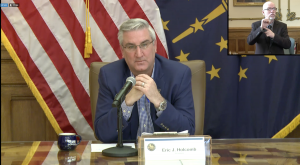
In a new and lengthy executive order released Friday that goes into effect on Monday and lasts through May 23, numerous businesses will be able to reopen but with different levels of restrictions and in multiple stages.

There’s a right way and a wrong way to approach negotiations, whether for a vendor contract, a lease or with a customer. The first step is determining where you stand.

The economic notion of compensating-wage distinctions goes back to Adam Smith, who stated the “wages of labour vary with the ease or hardship, the cleanliness or dirtiness … of the employment.”
Engagement has clearly shown a correlation to greater productivity and workplace happiness, but how accurate is our method for measuring workplace engagement? There are better ways.
In 1904, a national committee of Republicans traveled to Indiana to officially tell Sen. Charles Fairbanks he would be the party’s nominee for president.
Passively “managed” products can be fine, as long as they are just following prices in whatever market they are tracking. However, if they become big enough that they become the market and are the one setting prices, it’s dangerous.
A better target for attack would be Congress, for crafting a program that let so many larger businesses in the door.
When Daniels and the Republicans in the Statehouse told Hoosier voters they were “protecting taxpayers” by putting tax caps in the state’s constitution, objections by mayors and warnings by fiscal and tax policy experts were pooh-poohed. Politics won. Prudent and informed policy lost.
Going without college sports pales in comparison to the sacrifices made at hospitals every day, but the absence of normalcy weighs on everyone.
Perhaps 2020 will be the year in which Indiana’s daunting public health challenges bring a bipartisan focus to our civic health challenges, too.
If you’ve been tuning in to Indiana Gov. Eric Holcomb’s daily press briefings to hear updates on the coronavirus pandemic, you might have noticed Andy Rork in the corner of your screen.
Rating agencies, which already ranked Steak n Shake on the lowest rungs of their creditworthiness ladders, further sounded the alarm bells in recent weeks after Steak n Shake paid off some of its debt at a discount—something a lender never would agree to if it thought it was going to be paid in full.

Across Indiana, local health departments have been scrambling to keep up with the job of tracking, one patient at a time, the spread of the virus that has already claimed the lives of more than 900 Hoosiers.
Advocates agree that the federal and state moratoriums are helpful, but say renters will need more help long term. Even one missed rent payment can put low-income residents so far behind they can’t recover.
When GOP congresswoman Susan Brooks announced in June that she wouldn’t seek reelection this year, a window of opportunity opened for eager Republicans across Indiana’s 5th District.
Micah Beckwith regularly shoots Facebook Live videos talking about his political concerns. One common theme—he’s worried about government taking freedoms away from citizens.
Andrew Bales, a retired teacher and army veteran, is a candidate in the Republican primary in Indiana’s 5th Congressional District.