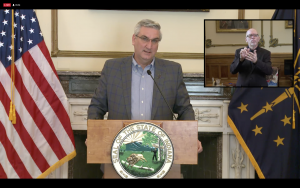
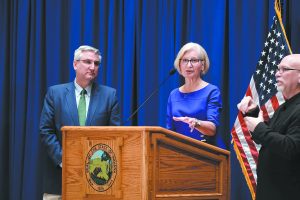
Gov. Eric Holcomb on Wednesday announced a campaign called “IN this together” to encourage citizens to follow stay-at-home and social-distancing guidelines during the pandemic.
Indiana will receive $215 million of the $13.5 billion that the federal government is handing out to states for schools as part of the COVID-19 rescue package.
The list of volunteer professionals includes doctors, nurses, paramedics, dentists, veterinarians, therapists and midwives. Many of those people will be used to free up health care workers who have experience with more critical care.
Perhaps $1 billion will have to be spent from the state’s $2.3 billion in cash reserves to get through the budget year that ends June 30, Gov. Eric Holcomb said Friday.
The state said more than 5,300 health care workers who are not currently working in hospital settings have volunteered to help during the projected coronavirus surge, which is expected to begin in mid April.
State officials again refused to say how many ventilators or intensive-care unit beds hospitals have, citing confidentiality agreements with hospitals and vendors. Some hospitals expect their supplies to run short in coming weeks.
Government must have the means to react quickly and decisively to contain a catastrophic disease outbreak—actions that might infringe on individual freedoms.
A big challenge has been that some fundamental assistance—like providing food to low-income or aging individuals and families—doesn’t easily transition to a work-from-home model.
As Indiana state health commissioner, Dr. Kristina Box finds herself in the spotlight as the highest-ranking public health official in the state during the pandemic, which threatens to overwhelm hospitals.
State and federal authorities have expanded the eligibility for unemployment benefits significantly, meaning if you’re out of work and didn’t qualify under the old rules, you likely will now.
With revenue down because of banned dine-in services, some eateries are taking advantage of the governor’s order allowing more restaurants and breweries to temporarily offer carryout and delivery of alcohol.
Indiana’s unemployment rate held steady in February, just before a wave of job losses and unemployment applications in March due to the coronavirus pandemic that threaten to send the rate much higher.
Cris Johnston, director of the Office of Management and Budget, said agencies have been told to look for places where they can eliminate spending. But he said there are no plans to cut funding for schools, even though it’s the state’s largest expenditure.
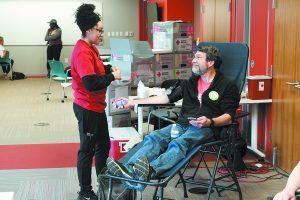
This week, Indianapolis tech firm Selfless.ly partnered with Serve Indiana—the state commission on volunteerism and service—to launch an initiative to identify a cadre of ready volunteers and match them with volunteer opportunities that can be accomplished while social distancing.