Indiana regulators OK energy project tied to Google’s Morgan County data center
Crosstrack will be sited in southwestern Indiana’s Pike County where it will tie into the electric grid, storing up to 130 megawatts of power.
Read More
Crosstrack will be sited in southwestern Indiana’s Pike County where it will tie into the electric grid, storing up to 130 megawatts of power.
Read More
The petition argues that the Indiana Utility Regulatory Commission erred when it voted 3-1 to allow AES to collect an additional $71 million from its Indianapolis-area electric customers through base rate increases.
Read More
IURC Chair Anthony Swinger promised to exercise a “healthy skepticism” of rate requests from utilities.

The move follows Indiana Gov. Mike Braun’s demotion of IURC Chairman Andy Zay after the agency approved an AES rate hike.

In a joint statement with Abby Gray, head of the state’s Office of Utility Consumer Counselor, Braun called the Indiana Utility Regulatory Commission’s decision “unacceptable.”
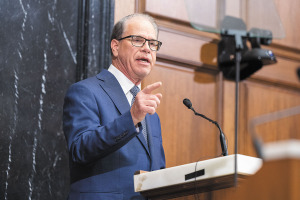
Gov. Mike Braun said he was “deeply disappointed” by the IURC’s approval of an AES rate increase.
The initial settlement agreement called for the collection of about $90 million, an amount that was opposed by the state’s consumer advocate and a ratepayer watchdog group.
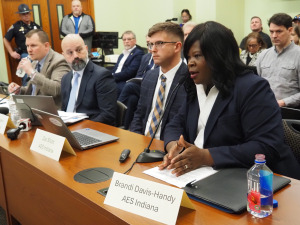
Indiana regulators on Tuesday spent hours questioning the state’s biggest energy providers on their rates, customer service and more amid rising frustration from ratepayers.
AES Indiana is postponing all of its scheduled open houses this month “out of an abundance of caution” as social media threats against the company continue, a spokesperson said Friday. The company has not released information regarding rescheduled dates.
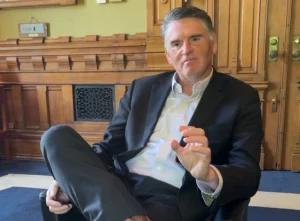
State Treasurer Daniel Elliott on Tuesday said he is “increasingly worried” about the impact of a recently announced deal that would see private equity firms acquire the parent of AES Indiana.
The Tuesday event, which was canceled an hour before it was set to begin, is one of several public open houses scheduled for this month.
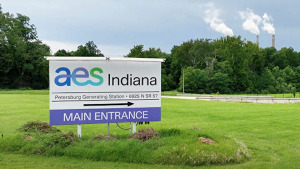
A consortium led by a BlackRock subsidiary and EQT Infrastructure said AES Indiana and AES Ohio will remain “locally operated and managed regulated utilities.”
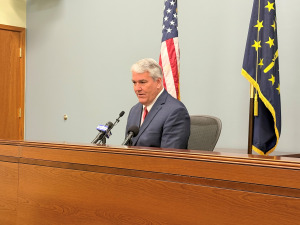
In public hearings next month, the Indiana Utility Regulatory Commission will question the state’s five largest investor-owned utility companies about billing transparency and solutions to rising energy costs.
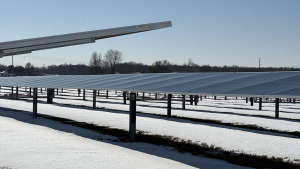
The project includes 250 megawatts of solar generation and 180 megawatt-hours of energy storage at the existing Petersburg Generating Station.

The health care system’s plan to meet its energy needs includes working closely with its electricity provider, AES Indiana, building additional backup power systems and operating its own natural gas utility plant for heating and cooling.
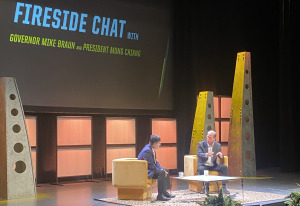
The Global Nuclear Energy Economic Summit at Purdue University got underway Wednesday with several hundred attendees from energy companies, utilities, academia, government and regulatory agencies.
The Indiana Office of Utility Consumer Counselor, which acts on behalf of utility customers, did not join the settlement. Neither did ratepayer advocacy group Citizen’s Action Coalition.
If the proposed increases are approved, customers will see a 7.2% hike in the second quarter of 2026 and then about a 6% increase in January 2027. Those are on top of a 6% increase for previously approved projects in 2026.

 Mickey Shuey
 AES Indiana, which owns a half-acre parking lot at 355 E. Pearl St., just east of Alabama Street, confirmed to IBJ that the company is “currently discussing its sale with a third party.”

Brandi Davis-Handy discusses the customer billing issues, the challenges of growing the business and the company’s final push to eliminate coal as a source of energy for creating electricity.
If approved by the Indiana Utility Regulatory Commission, AES Indiana would be on its way to becoming the first Hoosier investor-owned electric utility to stop burning coal, according to Indiana Utility Report.
The utility’s initial proposal provoked widespread objections, including from more than 40 customers who attended two field hearings.