
California to sue in effort to stop Trump from imposing sweeping tariffs
The lawsuit will argue that enacting such tariffs requires approval from Congress.
The lawsuit will argue that enacting such tariffs requires approval from Congress.
Though Trump says his tariffs are intended to bolster U.S. auto manufacturing, automakers aren’t able to reconfigure their sourcing in short periods of time, experts say.

It was the second straight sizable increase, suggesting that U.S. drug makers with Irish manufacturing hubs like Indianapolis-based Eli Lilly and Co. could be stockpiling products ahead of any tariffs on the sector.
President Donald Trump said he is exploring possible exemptions to his tariffs on imported vehicles and parts to give auto companies more time to set up U.S. manufacturing.

The fallout has been most pronounced for companies that buy or sell from China, but even those that do business with other countries say international buyers are treading carefully.
The United States’ top imports from China, meanwhile, include electronics such as computers and cell phones, industrial equipment and toys.
Markets swooned Thursday as investors realized that the president is not backing away from a confrontation with Beijing.
Trump said more than 75 countries that were set to face “reciprocal tariffs” have been involved in negotiations and would see their levies paused or lowered to 10 percent for 90 days, also effective immediately.
U.S. Treasury bonds sold off Wednesday as a global trade war escalated, with the Trump administration’s harshest tariffs yet drawing swift retaliation from China and the European Union.
World leaders and business executives are bracing for higher tariff rates that took effect at 12:01 a.m. Wednesday.
Hope still remains on Wall Street that negotiations may be possible. The country’s top trade negotiator, Jamieson Greer, said roughly 50 countries have already been in contact about new tariff deals.

The discussions highlight how the auto industry is beginning to digest the initial fallout from President Donald Trump’s escalating trade war.
America’s trading partners wrestled with responses to U.S. President Donald Trump’s blast of tariff hikes and some planned to send negotiators to Washington, D.C.
President Trump’s threat, which he delivered on social media, came after China said it would retaliate against U.S. tariffs announced last week.
President Trump’s comments came as global financial markets appeared on track to continue sharp declines once trading resumes Monday.
The new tariff matches the rate of the U.S. “reciprocal” tariff of 34% on Chinese exports that President Donald Trump ordered this week.
Goods imported from dozens of countries and territories are now going to be taxed at sharply higher rates, and that is expected to drive up the costs of everything from cars to clothes to computers.

President Donald Trump on Thursday revoked a nearly century-old tax loophole that saved companies from paying tens of billions of dollars in fees on cheap imports, most of which come from China.
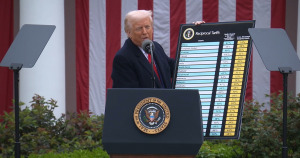
President Donald Trump on Wednesday announced a baseline tax on imports from all countries, as well as what he called “reciprocal” tariffs on dozens of nations that run trade surpluses with the U.S.
As the trade wars launched by U.S. President Donald Trump continue to escalate, all eyes are on Wednesday.