

Europe warns of ‘dangerous downward spiral’ after Trump threatens tariffs over Greenland
The eight European countries targeted by U.S. President Donald Trump for a 10% tariff for opposing American control of Greenland blasted the move.
The eight European countries targeted by U.S. President Donald Trump for a 10% tariff for opposing American control of Greenland blasted the move.
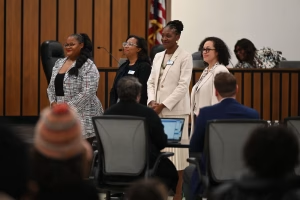
The district encompasses downtown, the near-east side and southern parts of Indianapolis.
An application for Taft Stettinius & Hollister LLP was completed Wednesday with the Indiana Lobby Registration Commission, indicating the firm will represent CBFC Development LLC, an affiliate company for the NFL franchise.
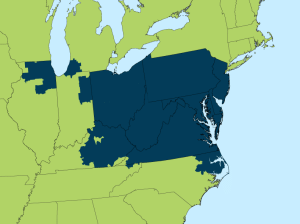
The mid-Atlantic grid operated by PJM encompasses all or parts of 13 states, including Indiana.
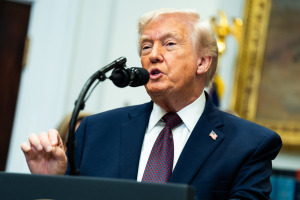
The administration released no legislative text nor timeline for related congressional action and did not indicate whether Republican leaders support the proposal.
Democratic Sen. Kirsten Gillibrand of New York and Republican Sen. Ashley Moody of Florida on Thursday plan to introduce legislation that would bar lawmakers and their immediate family members from trading or owning individual stocks.

Osili becomes the first Democrat to launch a mayoral bid in what could be a crowded race to succeed Mayor Joe Hogsett, who said during his 2023 campaign that his third term would also be his final.
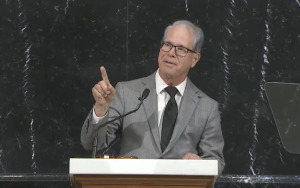
The governor also celebrated data center development, but he said tech companies should pay for 100% of their power needs.
Sheriff Forestal is asking the feds and the state to transfer people held in Indianapolis elsewhere in a timely manner, or the Marion County Sheriff’s Office may need an additional $3 million to continue operating safely, he warned.
Republican fiscal leaders, however, haven’t said which of the dozens of other new federal tax cuts—including the temporary deductions for workers who receive tips and overtime wages—will be extended to state taxes.

The governor is expected to address the Bears situation during his speech Wednesday night, although the Governor’s Office is keeping specifics—and the names of the guests it has invited to the event—under wraps.

“All U.S. automakers are doing great,” Trump said.
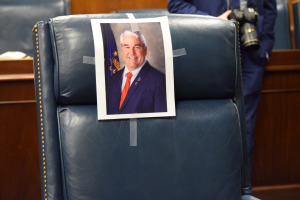
Senate Bill 21 passed the chamber 37-11 and now heads to the Indiana House.
Currently, 10 states hold general elections for utility regulators. Lawmakers on both sides of the aisle think Indiana should join them.
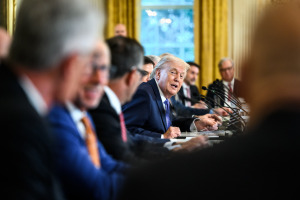
The grants supported hundreds of clean energy projects in 16 states, including battery plants, hydrogen technology projects, upgrades to the electric grid and efforts to capture carbon dioxide emissions.

The survey asked 600 Indiana residents about a wide variety of topics, including what they thought about Indiana as a place to live, taxes, tariffs, redistricting and data centers.
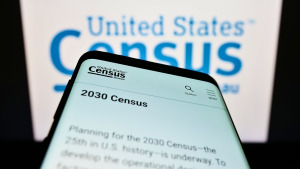
As the challenges work their way through the courts, the Census Bureau is pushing ahead with its planning for the 2030 count and intends to conduct practice runs in six locations this year.

SUN Bucks provides $120 in grocery benefits across a summer per eligible school-age child. The federal government covers the benefit, and splits administrative costs 50-50 with states.

The bill, authored by Sen. Aaron Freeman, R-Indianapolis, would allow casino operator Full House Resorts Inc. to move its gaming license from Rising Sun to Marion County–with a few conditions.
From utility rates to tenderloin sandwiches, here are some bills IBJ is following this legislative session.