

Indiana education officials to ask for federal funding as lump sum with fewer requirements
The money would be available to more schools to use with fewer rules about where the money would go.
The money would be available to more schools to use with fewer rules about where the money would go.
The Republican governor’s statements came on the heels of a string of shootings involving youth in the city’s core, including one on July 5 that killed two minors, and just before Indianapolis hosts WNBA All-Star Weekend.
The complaint alleges that party leadership repeatedly silenced delegates, bypassed convention procedures, and rewrote internal rules without consent.
The $54.6 billion budget, approved in May, spends 3% more than its 2023 predecessor. But the state’s spending power has sunk 5% since then.

A state senator is among those seeking to clarify the state’s new school attendance law amid online confusion.
Reserves will be 11.2% of Indiana’s spending, at the lower end of the 10-15% recommended to maintain Indiana’s AAA bond rating.

A January executive order gave state agencies until July 1 to complete a review and identify diversity, equity and inclusion in their policies. In total, 350 such initiatives were identified.
Gov. Mike Braun called the deadly Texas floods a “wake-up call” and said states—including Indiana—should examine whether emergency response systems have any “weaknesses.”

Some of the biggest funding reductions in the bill—like Medicaid reform—will be phased in, meaning it won’t immediately hit Indiana’s coffers.

Assessed values for commercial and industrial properties grew at a higher rate than those for residential, according to the study assembled by the Department of Local Government Finance.

At least seven public school districts in the Indianapolis area are raising the cost of preschool for the coming year, as the state makes cuts to its state preschool voucher program, On My Way Pre-K.

Education and labor experts note that making high school apprenticeships commonplace won’t be simple.

Indiana’s new Office of Entrepreneurship and Innovation is expected to focus on Main Street businesses—small businesses that are not venture-backed, not easily scaled and found in many towns and cities across the state.

The Indiana Department of Environmental Management identified a handful of regulations that could clash with a gubernatorial order to eliminate “unduly burdensome” or costly rules, though nearly all of them appear to be relatively minor tweaks.
The move also comes on the heels of a new law adopted by the General Assembly earlier this year to increase transparency requirements involving state contracting.

Sen. Eric Koch, R-Bedford, has been one of the Legislature’s biggest proponents of SMRs, streamlining the regulatory process for those reactors and trying to persuade utilities and manufacturers to embrace their development.
State government officials rescinded 8,486 hybrid remote work agreements Tuesday as part of Gov. Mike Braun’s push to return state employees to the office.

Proponents of an AI moratorium had argued that a patchwork of state and local AI laws is hindering progress in the AI industry and the ability of U.S. firms to compete with China.

Students currently enrolled in any of the eliminated or suspended programs will be allowed to finish their degrees through a teach-out process, officials said.
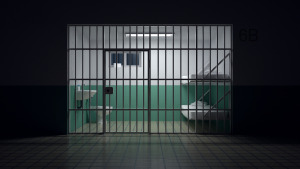
Meanwhile, Indiana prisons are near or over capacity, and areas of the state face an attorney shortage.