Council OKs new fees, regulations for scooter-rental companies
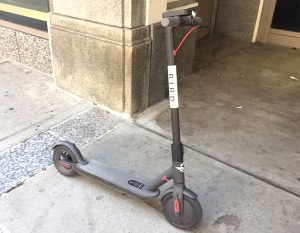
The regulations, passed 19-6 by the council, pave the way for Lime and Bird to return scooters to Indianapolis after they receive permits and agree to new conditions and fees.
An Indianapolis City-Council committee on Thursday evening voted to regulate businesses that rent out the dockless electric scooters that have caught on quickly since popping up around the city in the past two weeks.
City code enforcement officials sent the company a letter asking them to halt their service for 30 days while the city works out a regulatory scheme that would tackle dockless bike and scooter sharing.
The proposal, approved unanimously, will allow the Department of Public Works to purchase equipment as well as hire an additional 36 people, or six crews, to perform street maintenance work.
Mayor Joe Hogsett hopes to convince legislators that other Indiana cities, not just Indianapolis, could benefit from a non-resident income tax or the redistribution of income tax revenue.
The plan intends to use $200 billion in federal money to leverage more than $1 trillion on local and state tax dollars to fix America’s roads, highways, ports and airports.
Traffic downtown and the northwest side will be affected by the closures, which are expected to last about 35 days in late spring.
Experts suggest using beet juice, molasses, and even beer or cheese waste to make slick roads safer, in an effort to stop polluting fresh water sources with salty runoff.
The project will close the two streets just north of Fall Creek Parkway, as part of Citizens Energy’s $2 billion project to improve waterways.
The Indianapolis City-County Council on Monday night approved a plan to limit left turns at dozens of intersections on Meridian Street and College Avenue in preparation for the impending Red Line bus rapid-transit project.
The Carmel City Council still has to approve the agreement, which would allow the suburb to continue its plan to construct roundabouts along 96th Street at three intersections.
The spending is possible due to the state’s decision to raise the gas tax this year and its decision last year to return county option income tax revenue to cities.
The Carmel Board of Public Works approved the agreement with a Goshen-based construction contractor at a meeting Wednesday morning.
The updates to the manufacturer’s corporate offices are aimed at collaboration and efficiency. The overpass construction is meant to smooth traffic flow at a key entry point to the city.
The project will eliminate three of the five existing travel lanes from 116th Street to Main Street, add roundabouts at intersections, install a landscape median through the corridor and put multipurpose paths on both sides of the road.
Neither major-party gubernatorial candidate rejects using more so-called P3s in Indiana’s future. Both think the deals have their place, but they differ on when they should be used.
Indiana cities with a population of at least 10,000 are now allowed to impose an excise surtax and wheel tax to fund road projects and maintenance, under legislation passed this year.
Based on input from businesses, design options could include retaining walls, shifting the route to the east or west, and selecting different ramp locations.
The challenge, according to an author of a study of pedestrian-friendly cities, is picking up ground on the dozens of major metro areas that also are making walkability a higher priority.
Repairing the city’s aging sidewalks and installing new ones where none exist would run even more than the $720 million it cost to build Lucas Oil Stadium.