
Felonies, fines for improper CDLs advance to Indiana governor’s desk
The bill also creates new penalties of up to $50,000 for training schools that certify drivers without proper credentials.

The bill also creates new penalties of up to $50,000 for training schools that certify drivers without proper credentials.
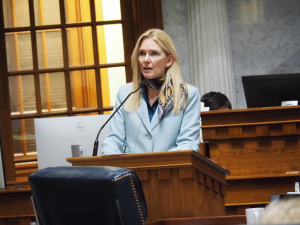
Senate Bill 199 directs the Indiana Commission for Higher Education to review programs whose graduates earn median wages below the average earnings of a high school graduate in Indiana.

The chamber’s final 43-6 vote on Senate Bill 282 followed weeks of negotiations between lawmakers and competing corners of the health care industry.

Restrictions apply to common student devices, which schools must either prohibit entirely or require students to keep powered off and inaccessible during the school day.

A narrowly divided vote to roll back portions of Indiana’s environmental code anchored a deadline-day push Tuesday as the Indiana House advanced a slate of bills and set up end-of-session negotiations across the rotunda.

A push from Gov. Mike Braun and Republican lawmakers to tighten oversight of commercial truck drivers advanced in the Indiana Senate on Monday.
Democrats argued that new rules could push eligible Hoosiers out of coverage.

Supporters say state action is needed to boost housing supply, but critics question whether the bill will actually lower costs.

The measure directs state officials to scrutinize and potentially eliminate certain low-wage college degree programs offered at Indiana’s public institutions.

Although supporters of the effort promised more than $100 million in annual savings, opponents — including Indiana’s top Medicaid official — warned the proposal could undermine care coordination efforts just weeks after other key reforms launched.

After hours of emotional testimony from frustrated parents and school leaders, an Indiana House committee is weighing whether to revive youth social media restrictions inside a wide-ranging education agency bill.

Indiana lawmakers on Monday revisited a controversial provision in Senate Bill 199 that would require state officials to scrutinize and potentially eliminate certain low-wage college degree programs offered at Indiana’s public institutions.
More than 450 House and Senate measures failed to advance by Monday’s deadline — but lawmakers could still revive language before adjournment.
Opponents of two separate measures raised concerns over cultural commissions and insurer-friendly lawsuit changes.
The vote comes as immigration enforcement—particularly actions by U.S. Immigration and Customs Enforcement, or ICE—has sparked protests, clashes with law enforcement and heightened political tensions in several states, especially in Minnesota.

Regulators on the Indiana Board of Pharmacy say they’re “frustrated” but cite procedural constraints amid ongoing investigations.

Under current state law, students are prohibited from using phones during instructional time, but they can use them during lunch and passing periods.
Senate Bill 21 passed the chamber 37-11 and now heads to the Indiana House.
Multiple education bills have already moved, and one—a cellphone crackdown proposal—was heard in the Senate education committee in early December.

The charter serves as a local constitution, spelling out everything from elections and offices to fines, taxes and the powers of town leaders.