
Combination of factors leaves staff shortages in city government
A pandemic hiring freeze, an early retirement program, and a nationwide desire for higher wages have left some city departments struggling for workers.
A pandemic hiring freeze, an early retirement program, and a nationwide desire for higher wages have left some city departments struggling for workers.
Economists say tight labor markets tend to give workers more leverage to form unions and to demand higher wages and better working conditions, while downturns tend to make workers less willing to make collective demands of their employers.
Ohio’s largest-ever economic development project comes with a big employment challenge: how to find thousands of construction workers in an already booming building environment when there’s also a national shortage of people working in the trades.
Remote work has stabilized at an extraordinarily high level: Around a third of work was done remotely in the United States in 2021 and 2022, according to several economists.
Government workers—teachers, firefighters, sanitation workers, bus drivers, city government employees—who make up more than 15% of the U.S. workforce, have seen their wages lag significantly behind those employed by private industry over the past year.
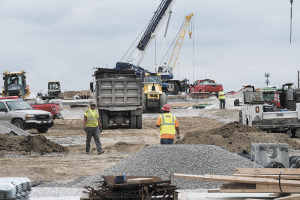
Experts predict the state will need more than 275,000 additional workers by 2026.

The American labor shortage that has hit restaurants, factories and other industries also is becoming a concern in Gasoline Alley, where crew members and engineers are in short supply.

Seattle-based Amazon doubled the size of its operations during the pandemic, adding more warehouses and employees. But as the worst of the pandemic eased, it found itself with too much warehouse space and too many workers.

The Indianapolis Airport Authority, National Bank of Indianapolis and Mays Chemical Co. are three of 24 local employers participating in the Good Wages Initiative launched April 25 by not-for-profit EmployIndy.
Data from payrolls processing firm ADP show a widening gap in hiring between businesses with 500 or more employees and businesses with less than 50 staffers. Those smaller businesses have lost jobs in three of the past four months.

Indiana’s unemployment rate hit record lows in January and February, yet labor participation remains stagnant as the state and country continue to grapple with workforce shortages.
If a majority of Amazon workers votes yes in either Bessemer or Staten Island, it would mark the first successful U.S. organizing effort in the company’s history.

Rather than hiring full-time executives, companies are increasingly likely to turn to a fractional executive—someone who serves part time, typically on contract rather than as an employee.
MakeMyMove, which launched about a year ago, will use the investment to scale up and hire several new employees, particularly in the areas of engineering, product development and sales.

One piece of an extensive piece of legislation to restructure the incentive toolkit of the Indiana Economic Development Corp. would create a statewide remote-worker grant program.

The former owner of the five-store local chain said he made the switch to reward employees, who also will benefit from significant state and federal tax advantages.
Among other changes, the two weeks of paid emergency leave that Kroger has been offering to employees who contract COVID-19 will no longer be extended to the unvaccinated, unless local jurisdictions require otherwise.

For the past year, Indiana employers have faced the challenge of whether to enforce COVID-19 vaccination mandates on workers who say the vaccines violate their religious beliefs.
Americans are in line for their biggest wage increase in more than a decade, according to a report released Wednesday, as companies struggle against a tight labor market and high inflation.

No matter which path companies choose, they’ve had to figure out new ways to keep employees connected now that their co-workers might not be in the same room—or even the same state.