Once-fringe Gen Con powers game industry
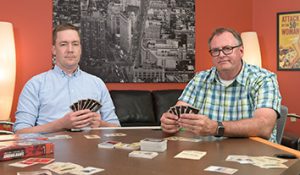
Indy’s annual Gen Con convention has become a powerhouse in the growing $880 million international hobby game business—and a boon for homegrown gaming startups, including Plowgames.
All have led some of the most promising companies and organizations in the city’s burgeoning tech space for at least three years—bootstrapping and collectively raising more than $12 million in venture capital and employing about 150 people along the way.
Indianapolis has joined about a dozen cities in hiring a California startup to develop a portal designed to help small business owners cut through red tape.
Michael A. Byers’ Tooth Bank is one of a tiny group of U.S. companies catering to the latest iteration of stem cell therapy: harvesting stem cells from the pulp inside baby teeth and extracted wisdom teeth, then culturing, freezing and storing them at a cryostorage facility for later use.
Kim Brand and a business partner have launched a “maker space” startup focused on the education market, called 1st Maker Space. It targets students in formal and informal class settings, and 3D printers are just a part of its arsenal.
Angie’s List has long been considered the 800-pound gorilla in the home-services market, an industry estimated to be worth at least $400 billion annually. But three tech startups from its own back yard believe they can better connect consumers and service providers.
The online ordering and delivery sector in and around Indianapolis is on the rise, with several firms either setting up shop or expanding here, hoping to capitalize on restaurant and consumer demand.
Central Indiana has been the birthplace of groundbreaking innovation felt nationwide–even worldwide.
What do the Indiana entrepreneurship programs—two of which are nationally known—have to show for their efforts?
Bite-size speeches are the thing at mingling events these days, as organizers aim to add speakers but avoid long, boring addresses. Getting to the point has always been valued in the business world, but some events now have rules around it.
Denver Hutt, the first director of the popular SoBro co-working space, plans to pass the reins in the next few months.
Startup OneJet flies six-passenger Hawker 400s between medium-size cities like Indianapolis, Milwaukee and Pittsburgh.
Finding and supporting savvy people might result in more life sciences startups.
The investment was in line with comparable quarters in recent years, but there’s evidence that at least one significant deal didn’t make the list.
The city of Fishers is proposing to purchase a new building for its entrepreneurial co-working space that would triple the size of the facility.
Dattus Inc., an early-stage company with roots in the Purdue Foundry entrepreneurship hub, has moved to offices in Indianapolis and plans to create 37 jobs by 2020.
Jacob Blackett and Sterling White buy rental houses. Through their 6-month-old firm, Holdfolio, the 24-year-olds plan to bundle them and sell investors equity stakes in the portfolio through a Web-based platform.
The firearms training system at Poseidon Experience uses real guns, but no bullets. The targets are on a screen. The guns’ magazines are filled with compressed air instead of bullets.
The corner of Brookside Avenue and 10th Street, just off Massachusetts Avenue, could soon be the center of what city planners hope is a model to address industrial blight.