2026 Innovation Issue: Two executives going all-in on AI
A real estate leader and pharmaceutical executive explain the practical and surprising ways they’re using AI in their fields and what the future might look like for AI and their industries..
The serial entrepreneur also launched the affiliated Longevity Today, a website that identifies, processes and summarizes life sciences research and offers information to the public through AI personas.
In the first Innovation Issue in 2015, IBJ featured several Indiana innovations. We’re revisiting some of those and introducing a few more worth mentioning.
The 20 companies IBJ featured in last year’s Innovation Issue all appear to still be in business, and some have introduced new products, raised money or made other moves.
When IBJ’s Innovation Issue surveyed the NFT landscape in 2022, NFT collectibles had accounted for $41 billion in spending a year earlier.
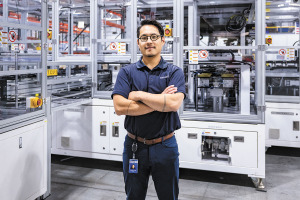
Mayor Tyler Moore said the project is progressing more slowly than initially expected, but Samsung’s involvement has allowed the first battery plant to pivot production to other applications and industries that rely on lithium-ion batteries.
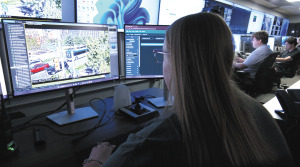
At IMPD’s real-time crime center, analysts have access to live feeds, updates and search options from more than 300 license plate readers, 160 IMPD-owned cameras, about 150 cameras outside of businesses.
In Indiana, gone are Eleven Fifty Academy and Kenzie Academy. National coding bootcamps like Bloom Institute of Technology, Hack Reactor and Triology have significantly scaled back or totally restructured in recent years.
Seventeen companies and organizations are members with room left for only a few more.
Technology giant Intel once predicted that by 2020, the number of smart device would grow to 200 billion or about 26 smart devices for every person on Earth. But the number today is quite a bit lower.
Eleven years later, IBJ checks back in with some of those innovators to see what they’re up to — and where they are — now.
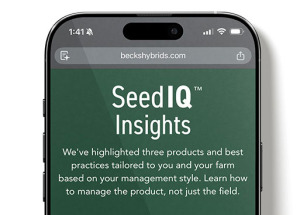
In February, Beck’s publicly launched SeedIQ, a free online product management platform that uses artificial intelligence to provide data and management recommendations to help farmers unlock the potential of their corn and soybean hybrids.
The company’s dispute with Corteva Agriscience highlights the tension between Inari’s model and an industry long dominated by a small number of global companies.
More than half of employed American adults surveyed in February by Gallup said they use artificial intelligence in their jobs at least a few times a year.
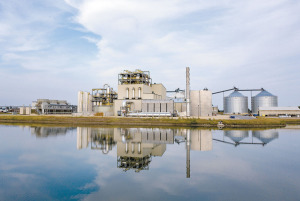
Low commodity prices and high costs for fertilizer and diesel means that many Indiana corn farmers do not expect to break even this year. But demand in the ethanol market could help improve that situation.
Innovation is the byproduct of a free, capitalist society. Said differently, a free, capitalist society naturally incentivizes people to innovate because they receive the potential upside of their efforts.
IBJ spoke with Indiana University professor Brian Williams about teaching in the age of artificial intelligence and how he encourages — and discourages — its use in his classroom.
Emmis founder Jeff Smulyan founded Indianapolis-based NextRadio as an Emmis subsidiary in 2012.
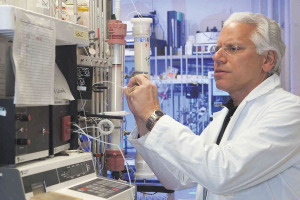
Richard DiMarchi still works a full schedule, researching and teaching at Indiana University.
What a difference a decade (and a pandemic and a complete rethink of the utility of office-based work) makes.