Colts capacity reduced to 10,000 for next home game
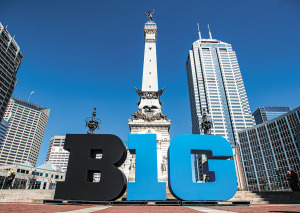
It’s unknown whether the health department will institute the same restriction for the Big Ten Football Championship game, scheduled to take place the day before the Colts game.
The Indianapolis Colts spent at least $6.3 million to acquire the lots, most of which are vacant and have been used for game parking by third-party vendors since Lucas Oil Stadium opened in 2008.
The decision comes after voter complaints of lines at early-voting centers that were several hours long.
The decision will require unanimous support from the three-member Marion County Election Board, which consists of two Democrats and one Republican.
The increase to capacity for the game against the Cincinnati Bengals follows continued discussions with the Marion County Public Health Department.
The new occupancy limit is the latest development in the see-saw saga of the soccer club’s attendance during the pandemic.
Pete Ward, chief operating officer for the Colts, confirmed the 200% increase in the maximum-allowed crowd for the Sept. 27 game against the New York Jets.
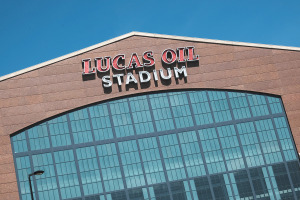
The Indianapolis Colts will be limited to 2,500 spectators at Sunday’s home football opener at Lucas Oil Stadium even though crowds for Indy Eleven soccer games at the venue have regularly doubled that figure since early July.
The Indianapolis Colts are cutting back on spectator capacity in their latest health and safety plan, with hopes of boosting crowds as the season progresses, depending on the course of the COVID-19 pandemic.
The NCAA and the Indiana Sports Corp. both said they’re still planning for the Final Four on its original dates. Some sports business experts wonder whether the college basketball tournament could benefit from a “bubble” strategy like the NBA or NHL.
The NFL and its franchises are discussing a plan by which rows of seating closest to the field in stadiums this season could be covered and used to display the logos of sponsors and messaging for league and team initiatives.
The contest was only the second deemed to be a sellout by the Big Ten in the title game’s history. The other came in 2015 when Michigan State played Iowa in a battle that featured two teams ranked in the top five.
The average season-ticket price for 2020 will rise 2.9 percent, according to the Indianapolis Colts, but about two-thirds of the tickets will be priced the same or less.
The Indy Eleven drew average crowds of more than 10,000 per game to Lucas Oil Stadium in their second year in the United Soccer League.
The board carries $56 million in liability insurance for its facilities, including a $1 million general liability policy and a $55 million umbrella policy.
Indianapolis Colts hospitality vendor Centerplate announced Thursday that it has added several food items that aren’t typically found at sporting events, plus some that feel right at home. It also revised the beverage menu with new beer offerings.
The upgraded network—available to Verizon customers with 5G-enabled devices—will be limited in its first year at Lucas Oil Stadium, generally to lower-bowl seating between the 20-yard lines and on the concourses.
The wireless infrastructure at Lucas Oil Stadium could see significant improvements in the coming months as part of a three-way deal between the Colts, the Capital Improvement Board and Verizon.
Legislation passed by the Indiana Senate makes money for a soccer stadium available only if the city gains a Major League Soccer franchise—but that same legislation could make it more likely the MLS gives it a team.
The spectators on hand for Ohio State’s 45-24 defeat of Northwestern at Lucas Oil Stadium inched past last year’s game attendance by about 500 people, but fell short of a complete sellout.