
Duke Realty reassures its shareholders
CEO Jim Connor said his company has a “high-quality, diversified portfolio of over 550 logistics facilities and over 800 diversified customers.”
CEO Jim Connor said his company has a “high-quality, diversified portfolio of over 550 logistics facilities and over 800 diversified customers.”
This photo taken on Dec. 10, 1942, shows the inside of a liquor store at the Claypool Hotel, although the description does not name the store. It could be the Estates Liquor store, which was located in the building for decades.
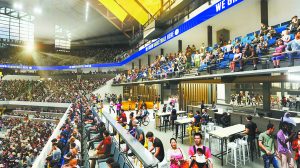
The Capital Improvement Board is significantly scaling back the first phase of a $360 million Bankers Life Fieldhouse renovation as uncertainty about working conditions and the NBA season have thrown a wrench into the construction schedule.

The Airbnb concept for tiny houses was dissolved March 23 with more than $765,000 in outstanding business debt.

Sales of existing single-family homes increased dramatically in central Indiana in March despite a global pandemic that limited house shopping. Meanwhile, tight inventories helped propel the median home price in the region to a record.

The Indy Parks and Recreation Department would share space in the $20 million center with Community Health Network. But a new wrinkle potentially stands in the way of the project.
The new executive order, which extends the stay-at-home directive through April 20, includes many of the same provisions as the initial order, which took effect March 25, but it adds new language in an attempt to strengthen the existing guidelines and creates an Enforcement Response Team to ensure businesses are complying.

State officials declined to provide details on specifically how the hotel is being used—including whether it is a treatment site for homeless individuals—to protect patient privacy.
In addition to being the longtime owner of the Indianapolis-based Double 8 Foods grocery chain, Kuperstein was the first director of education for the U.S. Holocaust Memorial Museum in Washington, D.C.

We check in with firms of all stripes to learn how they’re seeking to persevere—and how some are plotting to gain a competitive advantage when normalcy returns.
Cantu has created the distillery’s cocktail-to-go concept, which has been a significant boost to revenue amid the COVID-19 outbreak.
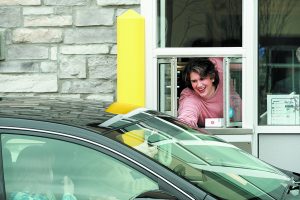
On the day Rachel Priddy finally got word from her contractor that she could apply for a certificate of occupancy to open her coffee shop in Carmel, Gov. Eric Holcomb ordered all restaurants to shut down in-person dining.
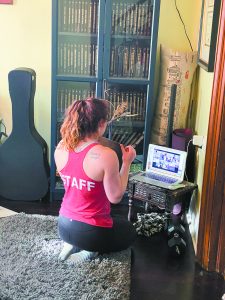
Naptown Fitness is offering its members a different kind of carryout as a way to stay healthy while gyms are closed during the pandemic.

About 60% of the company’s sales typically happen at lunch and are delivered to workplaces, which have been stripped down to only the most essential people.

The company is cutting more than 100 employees and furloughing others as it weathers the temporary shutdown of much of the retail industry.
The move—while expected—extends the pain for a hospitality industry that is reeling from closures that have eateries on the brink.
Millions more are in danger of being furloughed or fired as chains reel from nationwide closures that started about two weeks ago and have totaled nearly 50,000 locations.
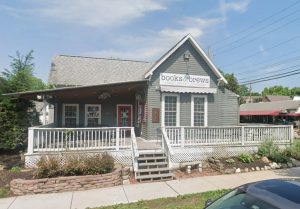
The firm is keeping its options open for the site—including upgrading the existing building or redeveloping it entirely.
The one-day strikes had little impact on consumers, but the unrest called attention to mounting discontent among low-wage workers who are on the front lines of the pandemic.

Macy’s, Kohl’s and Gap Inc. all said Monday they will stop paying tens of thousands of employees who were thrown out of work when the chains temporarily closed their stores and sales collapsed as a result of the pandemic.