

Top state officials urge residents to take stay-at-home order seriously
Top Indiana officials warned Tuesday that the state’s jump in coronavirus illnesses is likely just the beginning and that obeying a new stay-at-home order is necessary.
Top Indiana officials warned Tuesday that the state’s jump in coronavirus illnesses is likely just the beginning and that obeying a new stay-at-home order is necessary.

The new outbreaks at Amazon’s U.S. facilities come days after the online retail giant announced plans to hire 100,000 new workers to help cope with the flood of orders that have clogged its system.
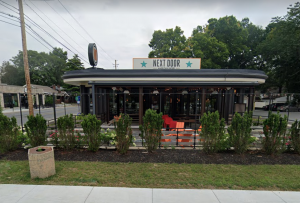
Upscale restaurant Hedge Row and the more casual Next Door both opened in Indianapolis in 2018. Both are part of The Kitchen Restaurant Group founded by Kimbal Musk.
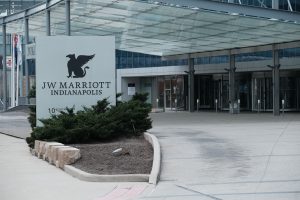
The 1,005-room JW Marriott Indianapolis and 650-room Indianapolis Marriott Downtown closed Monday after they stopped taking reservations late Sunday.

Gov. Eric Holcomb is telling Hoosiers to “hunker down” and stay at home for the next two weeks, except for what’s deemed “essential” business and activity. The order raises a bunch of questions about how it will work and what’s allowed. Here are some answers to those questions.

Indianapolis International Airport’s budget is bound to take a hit from a major decrease in passengers during the COVID-19 pandemic, but airport officials say they have made preparations for economic disruption.

Since the start of 2020, Simon shares have lost 67.7% of their value—chopping $31 billion off the company’s market capitalization.

“It’s your job to survive and to make sure that when these social controls are lifted and everybody starts to come back out that you’re ready for business,” IU’s Phil Powell, an economist at the Kelley School of Business, tells host Mason King.

Top-level negotiations between Congress and the White House churned into the night Sunday over a now nearly $2 trillion economic rescue package. The draft aid bill was declared insufficient by Democrats, who argued it was tilted toward corporations.

The drugmaker did not say whether it might broaden the testing in the future to include non-health care workers.

Many of those workers already live paycheck to paycheck—and a disruption in the flow of those checks could set off long-term financial problems. Foreclosures, evictions, bankruptcies, repossessions and more.

Concerns about the spread of COVID-19 have put in peril thousands of businesses, from restaurants and hotels to airlines and manufacturers of consumer goods.

Applications for home construction permits soared 34% in the Indianapolis area in February. The flurry of new applications came before the first cases of COVID-19 hit Indiana.

The not-for-profit, which has more than 4,000 employees, encouraged people to continue making drive-up donations at the stores during limited hours.

Early this century, the NCAA enlisted the accounting firm Deloitte to conduct a risk assessment, one that looked at the seemingly preposterous notion that the NCAA men’s basketball tournament—one of the most lucrative events in sports—would be canceled.
The centerpiece of the Senate GOP plan would be hundreds of billions of dollars sent to Americans in the form of checks as a way to flood the country with money in an effort to blunt the dramatic pullback of spending.

Several developments in recent days have been thrust into holding patterns, as banks and financial institutions have stopped approving new construction loans for hotels and other projects amid the economic plunge from COVID-19.
Indiana Gov. Eric Holcomb signed 84 bills on Wednesday, but has not made decisions yet on several pieces of controversial legislation.
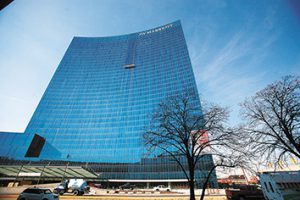
The owners of the city’s two largest hotels are considering closing them amid drastic decreases in business caused by the COVID-19 outbreak.
This area has 1,081 intensive care unit beds, but they could be filled by coronavirus patients within weeks under numerous scenarios mapped out by the Harvard Global Health Institute.