
Sid Mishkin: In a time of crisis, where is our leader?
The president should do his job, not pass it off to the states.
To refine your search through our archives use our Advanced Search
The president should do his job, not pass it off to the states.
We know the economy is sick now—but it’s been unhealthy for large segments of the community even in good times.
The problem is that our current systems—the ones that do everything from keeping grocery stores stocked to hospitals functioning—are optimized to work very, very efficiently under normal conditions. But not necessarily when things go sideways.

The decisions about construction are up to developers and construction firms, as the industry is exempt from Gov. Eric Holcomb’s orders that non-essential businesses close and Hoosiers stay home.

Jennifer Pyrz will serve as chief development officer and vice president of infrastructure, strategy and innovation.
CEO Jim Connor said his company has a “high-quality, diversified portfolio of over 550 logistics facilities and over 800 diversified customers.”
The changes the state is making in the primary due to the coronavirus pandemic might indefinitely alter how we carry out campaigns and conduct elections going forward. Today’s alternative might become tomorrow’s norm.
The federal CARES Act, which offers aid and stimulus in reaction to coronavirus pandemic, is without precedent in scale. But bold governmental stimulus programs go back to the early years of the country.
Runaway fiat currencies throughout history, like the U.S. dollar today, all end the same: with deflation which may be preceded by hyperinflation.
It is a safe bet that the pandemic will produce a decline in gross domestic product and unemployment rates at a level not seen since the Great Depression.
Despite the WHO telling us years ago that climate change will exacerbate infectious disease pandemics, these twin threats are now upon us.
This week we introduced a weekly podcast called “Beyond COVID,” with the goal of helping local companies get to the other side of the coronavirus crisis in a position to thrive.
A planned $1.5 million investment in Noblesville’s historic railyard is designed to draw visitors into downtown, but it also might put the city’s rocky relationship with rail back on track.

Givans is busy selling her spirited, printed fabrics—some of which she has designed—to customers who are making masks for themselves and others.

When the city was threatened with losing the Indianapolis Indians, the public rallied in ways big and small to keep the team here.

When a complex issue seems so overwhelming that a person becomes paralyzed with inaction, it becomes important to delineate and solve your challenges independently.
Investing locally is rewarding as part of a balanced portfolio. It is also exciting and gratifying to be part of allowing a local startup to launch or grow.
This photo taken on Dec. 10, 1942, shows the inside of a liquor store at the Claypool Hotel, although the description does not name the store. It could be the Estates Liquor store, which was located in the building for decades.
Within a week of Indiana’s first confirmed case of COVID-19, the Indianapolis-based endowment granted $15 million to underwrite a new community fund dedicated to helping social service agencies respond to the pandemic.
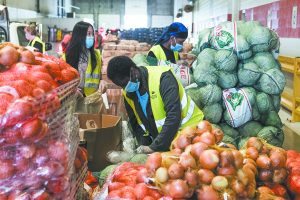
The Indianapolis-based hunger relief organization has seen demand for its services soar because of the coronavirus pandemic. The health crisis has forced the group to convert its biggest annual fundraiser into an online event.