
State working with 15 companies to acquire more personal protective equipment
Luke Bosso, chief of staff for the Indiana Economic Development Corp., said during Monday’s media briefing that the state has purchased 1.9 million pieces of PPE so far.
Luke Bosso, chief of staff for the Indiana Economic Development Corp., said during Monday’s media briefing that the state has purchased 1.9 million pieces of PPE so far.
But an administrator of energy-assistance programs says the funding “only scratches the surface” of what’s needed.
The Coronavirus Aid, Relief, and Economic Security Act, which President Donald Trump signed into law on March 27, provided $2 trillion in economic aid for business, hospitals and governments struggling with the impact of the pandemic.
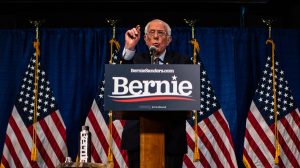
Sanders planned to talk to his supporters later Wednesday.
State unemployment specialist Josh Richardson talks with host Mason King about who is now eligible for benefits under an expansion approved by Congress as well as how soon they’ll begin receiving benefits and how the agency is adjusting to a flood of applicants.
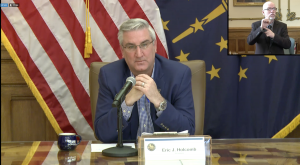
Gov. Eric Holcomb acknowledged the state is facing a potential mental-health crisis, and said he is committed to offering services to Hoosiers who are feeling troubled.
More than 40% of Hoosiers have already filled out the 2020 Census, but concerns remain about getting the rest of the state to respond during a public health crisis.
State officials again refused to say how many ventilators or intensive-care unit beds hospitals have, citing confidentiality agreements with hospitals and vendors. Some hospitals expect their supplies to run short in coming weeks.
State and federal authorities have expanded the eligibility for unemployment benefits significantly, meaning if you’re out of work and didn’t qualify under the old rules, you likely will now.

Cris Johnston, director of the Office of Management and Budget, said agencies have been told to look for places where they can eliminate spending. But he said there are no plans to cut funding for schools, even though it’s the state’s largest expenditure.

The governor’s decision to block the bill from becoming law allows tenant protections the city of Indianapolis recently put in place to remain in force.
Gov. Eric Holcomb is telling Hoosiers to “hunker down” and stay at home for the next two weeks, except for what’s deemed “essential” business and activity. The order raises a bunch of questions about how it will work and what’s allowed. Here are some answers to those questions.
His decision—announced in a Statehouse address streamed online—follows in the footsteps of a handful of other governors across the country, including three of Indiana’s neighboring states: Michigan, Illinois and Ohio.

The governor also signed legislation that will eventually put more money into the state’s unemployment trust fund, a move that comes as the coronavirus outbreak has led to a jump in unemployment claims.
The governor said the decision will be up to Secretary of State Connie Lawson, a Republican who oversees the Indiana Election Division.
A former Senate budget writer said the hit to the state budget could be bigger than during the Great Recession, when state revenue dropped 15% over two years.
Two weeks ago, Italy had 1,700 cases of coronavirus and had reported 34 deaths. Now, Italy is reporting an estimated 25,000 cases and more than 1,800 deaths.
More than 200 of Indiana’s nearly 300 districts have closed after consultations with local health officials. But, in at least 21 states, officials have ordered closures to try to stop spread of COVID-19.
It was a fortuitous decision by legislative leaders heading into January to seek adjournment sine die by March 11 or 12.
Trump also told reporters at a White House briefing that he had his temperature taken before stepping into the room and it was “totally normal.”