
White House, House Democrats reach deal on coronavirus economic relief package
Agreement calls for spending tens of billions of dollars on sick leave, unemployment insurance, food stamps and other measures to address the unfolding COVID-19 crisis.
Agreement calls for spending tens of billions of dollars on sick leave, unemployment insurance, food stamps and other measures to address the unfolding COVID-19 crisis.
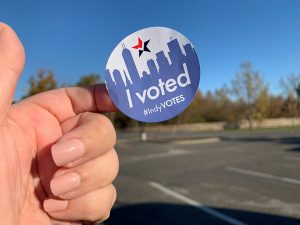
The party leaders did not suggest any delay in the May 5 primary itself.
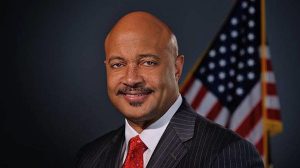
Despite a push from Indiana House lawmakers to clarify in state code whether Attorney General Curtis Hill could remain in office if his law license is suspended, state legislators failed to pass a bill before adjourning this year’s session Wednesday night.
The provision emerged at the Statehouse last month as a last-minute attempt to block the Indianapolis City-County Council from implementing two ordinances designed to protect tenants from predatory landlords.
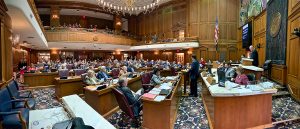
Just in the past month or so, lawmakers have debated proposals to prohibit cities from regulating landlord-tenant relations, allow the attorney general to step in when a local prosecutor decides not to pursue a case, and cut funding to IndyGo—which might stop construction of future bus rapid-transit lines.
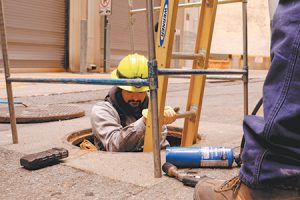
IPL said a typical household customer would likely pay an extra $1.50 a month in the first year. That monthly amount would increase by $1.50 each year, or by a total of $10.50 a month by the seventh year.
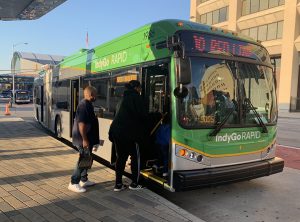
House Bill 1279, authored by Rep. Ed Soliday, R-Valparaiso, initially only addressed a regional development group in northwest Indiana. But an amendment sought to put teeth in a 2014 state law that required IndyGo to raise private dollars to help finance its mass transit operations.

The city is just six months from a tentative opening for the first piece of the justice campus project, the 37,000-square-foot Assessment and Intervention Center. Construction on other buildings in phase one is well underway, and the city has started planning for phases two and three.
House Speaker Brian Bosma is turning control over to Rep. Todd Huston, who isn’t wedded to policies of the past simply because they were justified when enacted and once worked.

The new language, which was added to a bill this week, would effectively make it illegal to panhandle in all of downtown Indianapolis.
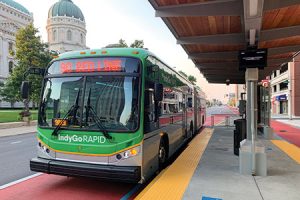
Sen. Aaron Freeman, the Indianapolis Republican and former city councilor who authored the legislation, said his goal is not to cripple the bus system’s operations but to hold IndyGo accountable to a 2014 law that required it to fund some of its operations with private funds.
Each year, one item seems to arise unexpectedly—innocently or intentionally—that seems to consume, as Statehouse denizens observe, all the time and calories.
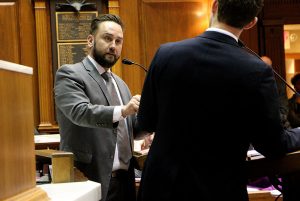
State Rep. Dan Forestal, a Democrat facing charges of drunken driving and impersonating a public servant, said he will not seek re-election so that he can “focus on my mental health.”
Despite shortages, Illinois residents bought more than $30.6 million in January, while out-of-state visitor sales totaled $8.6 million. Dispensaries sold more than 970,000 products.
Perhaps it is no surprise that Bosma decided to step down as speaker soon, then resign his House seat yet this spring.
IBJ’s Statehouse reporter Lindsey Erdody breaks down what bills are moving, which ones already are dead and what’s about to hit Gov. Eric Holcomb’s desk.
The legislation is meant to protect an individual’s right to sell or give his or her ticket to an event to someone else, should they choose to do so.
The House and Senate will need to reach agreement on a single version in the coming weeks of the legislative session.
Sen. James Buck of Kokomo said delegates at a state party convention would select the best Senate candidates and that eliminating primary campaigns would make running for office less costly.
A top legislative priority for House Republicans faced some push back this week from the very professionals lawmakers believed they would be helping with the measure.