Will pandemic’s tourism slump return after NCAA Tournament ends?
Hospitality leaders say no, although it will be some time before occupancy rates are back to normal.
With thousands of visitors in town for the NCAA basketball tournament and other athletic events, occupancy rates at downtown Indianapolis hotels were the highest in the nation for the past two weekends, breaking the pandemic tourism setback that settled in a year ago.
The move will allow fans and other visitors to use the Hyatt Regency, Westin and JW Marriott hotels for the first time in 10 days, after the three properties were fully booked by the NCAA for tournament needs.
Teams must undergo a quarantine and testing period when they arrive in Indianapolis—and no one from the schools was allowed to make the trip without seven consecutive days of negative tests.
Former JW Marriott employee Lisette Woloszyk watched things go from bad to worse in March, as cancellations for the city’s hotels racked up alongside COVID-19 cases.
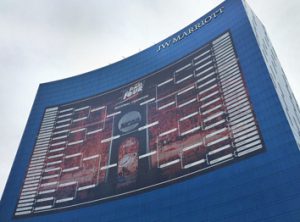
The tradition started in 2012, when what was essentially a giant decal of the Lombardi Trophy—the prize for winning the Super Bowl—went up on the front or eastern face of the 33-story hotel.
Town officials have grown “frustrated by a lack of transparency and communication from Loftus Robinson despite our multiple requests,” as well as the firm’s effort to continue batting away responsibility for the project.
Five of the city’s most prominent hotels, accounting for more than 2,800 rooms, will house the 68 teams in the three-week NCAA Division I Men’s Basketball Tournament that tips off March 18.
Hosting the entire 68-team NCAA men’s basketball tournament is likely to be a landmark event for Indianapolis and another boon for the city’s hospitality efforts, industry observers say.
The herculean effort over the next 2-1/2 months will involve city and state officials, tourism and civic leaders, and likely thousands of volunteers.
Nearly all of downtown’s nearly 7,600 hotel rooms could be used for the tournament, as well as additional hotels in other parts of the city as well.
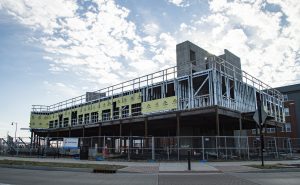
The Tribute and Aloft hotels—both of which were announced before the pandemic began—are among the few downtown lodging projects that are continuing to make progress.
The usual plan, which involves packing people closely on as many cots and mats as Wheeler Mission’s shelters can hold, isn’t an option under social distancing guidelines.
The 139-room hotel will be among the first components of the $300 million Bottleworks District to open. Additional tenants—including retailers, restaurants and entertainment-focused businesses—will begin opening early next year.
Work travel represented 21% of the $8.9 trillion spent on global travel and tourism in 2019, according to the World Travel and Tourism Council. How much of that business will return after the pandemic is uncertain.
The now-vacant land quietly went up for sale in July. It’s now under contract along with Drury Hotels’ Pear Tree Inn at 9320 N. Michigan Road
With travel and convention business continuing to stagnate and COVID-19 cases on a steep rise, many properties find themselves scrambling for long-term loan solutions and pleading for help from lenders.
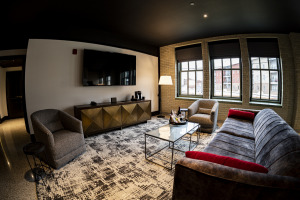
Work on the ritzy Mass Ave hotel has continued throughout the pandemic, despite delays to other projects around the city. The Bottleworks campus food hall is slated to open in January.
The American Hotel & Lodging Association report is meant to underscore what the lobbying group says is a critical need for additional stimulus ahead of Congress breaking for its October recess.
Six months into the pandemic, conveying warmth is the new hot topic among hoteliers and restaurateurs. Some are coming up with new ways.