
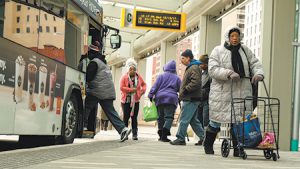
IndyGo seeks $25.8 million bond to purchase 27 hybrid buses
The Indianapolis City-County Council’s Municipal Corporations Committee voted 7-2 Wednesday night to advance the proposal to the full council.
The Indianapolis City-County Council’s Municipal Corporations Committee voted 7-2 Wednesday night to advance the proposal to the full council.
The transit agency is now considering a site on Post Road that is much larger than the former Harrison College site downtown and potentially much less expensive.
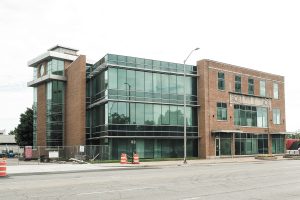
IndyGo is investigating whether to purchase the former Harrison College site for millions of dollars to use as additional space—but some board members are not convinced doing so is a good idea.
That amount would pay for half of the proposed IndyGo Purple Line project, a 15.2-mile route from Indianapolis to Lawrence with an estimated budget of $155 million.

IndyGo has been operating on a reduced schedule since March 29 because of COVID-19-related staff shortages and ridership declines.
IndyGo temporarily suspended fare collections March 29 to reduce interaction aboard buses.
IndyGo is among transit operators nationwide that will share $25 billion in federal aid as part of the Coronavirus Aid, Relief and Economic Security Act.

COVID-19-related driver shortages, among other factors, mean that route improvements planned for June now won’t happen until 2021.
Jennifer Pyrz will serve as chief development officer and vice president of infrastructure, strategy and innovation.
Transportation engineer Jennifer Pyrz now will lead IndyGo’s capital plan projects, including its upcoming Purple Line and Blue Line bus rapid-transit projects.
IndyGo says it’s cutting service because ridership has dropped as businesses have shut down or asked employees to work from home.
After the Indiana Senate passed a compromise on the IndyGo funding feud Wednesday night, the Indiana House killed the measure by not voting on it before adjourning for the year.
The new language offered on Monday afternoon would gradually phase in how much IndyGo has to fundraise and would require a new traffic study on the impact of the proposed Blue Line.
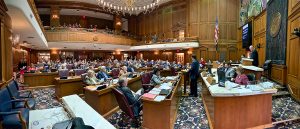
Just in the past month or so, lawmakers have debated proposals to prohibit cities from regulating landlord-tenant relations, allow the attorney general to step in when a local prosecutor decides not to pursue a case, and cut funding to IndyGo—which might stop construction of future bus rapid-transit lines.
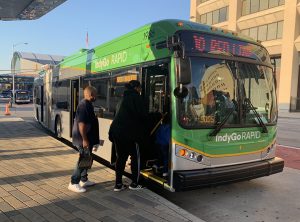
House Bill 1279, authored by Rep. Ed Soliday, R-Valparaiso, initially only addressed a regional development group in northwest Indiana. But an amendment sought to put teeth in a 2014 state law that required IndyGo to raise private dollars to help finance its mass transit operations.
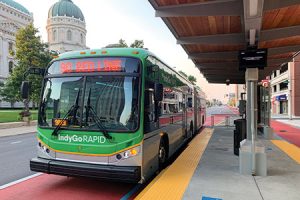
The IndyGo board on Thursday approved the $7.5 million purchase of 13 diesel buses and also canceled a $6.5 million order for five electric buses made in California by China-based BYD Ltd.
Sen. Aaron Freeman, the Indianapolis Republican and former city councilor who authored the legislation, said his goal is not to cripple the bus system’s operations but to hold IndyGo accountable to a 2014 law that required it to fund some of its operations with private funds.
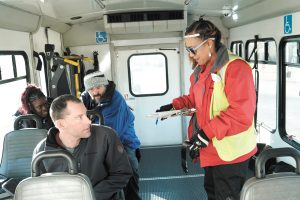
IndyGo says the vendor it hired to operate its reservation-based transit service for disabled riders isn’t meeting expectations.
Inez Evans started as IndyGo’s president and CEO just before the Red Line launched in September—a time of great promise but also complications.
IndyGo vendors are still working to deploy two key features that were supposed to be in place when the Red Line launched Sept. 1—and the delays are both disrupting Red Line operations and hurting IndyGo’s bottom line.