
Public camping ban, mobile phone prohibitions and other laws go into effect next week
More than 160 bills got past the finish line in Indiana during this year’s legislative session, with dozens of them taking effect in July.
Read More
More than 160 bills got past the finish line in Indiana during this year’s legislative session, with dozens of them taking effect in July.
Read More
Private meetings between legislators and lobbyists for data center companies resulted in rewritten incentive provisions that were not reviewed in public and were inserted in the final bill.
Read More
As the dust settles on House Enrolled Act 1038, questions are beginning to emerge about the next steps for turning legislation into a new casino in northeast Indiana.

HEA 1177 expands the tax credits available to businesses that help employees with the cost of child care. SEA 4 allows but does not require FSSA to use dollars from the Financial Responsibility and Opportunity Growth fund on child care vouchers.
Under the new laws, data centers will have to pay local governments a portion of the tax cuts they receive and Carmel and Fishers will have to end caps on rental properties.
Efforts to attract the Bears across the Illinois border received widespread, bipartisan support. But other items lawmakers tackled were contentious.
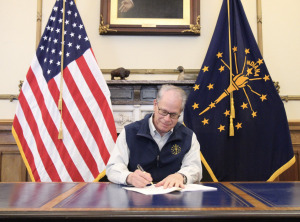
Braun has already signed 101 pieces of legislation so far this year — 57 this week as of Thursday morning — ranging from Republican priority bills on utility regulation to a $1 billion stadium package for the Chicago Bears.
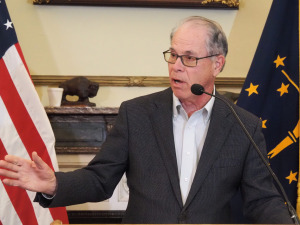
Indiana Gov. Mike Braun says his administration got almost nine in every 10 agency and agenda bills over the finish line during his second session.
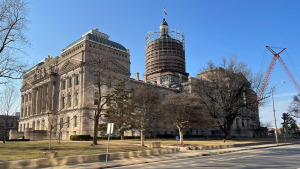
Friday is set to be the final day of the 2026 Indiana legislative session as lawmakers scramble to work out the final details on a number of bills.
Provisions of Senate Bill 270, which the House approved on Tuesday, would require townships with poor performance scores to merge with other townships or some cities.

The measure bans camping, sleeping or long-term sheltering on land owned by the state or a unit of local government — and establishes a Class C misdemeanor for violations.

The NCAA football oversight committee proposed the legislation to penalize schools who add players who did not make public their interest in transferring during the January transfer portal window.
Dozens of bills received final concurrence votes in both chambers Wednesday at the Indiana Statehouse.
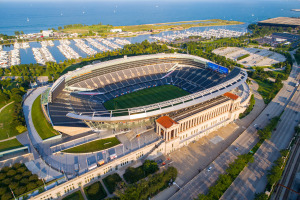
The Indiana Senate is set to vote as soon as Thursday afternoon on legislation that would authorize the financing and construction of a stadium in Hammond.

Restrictions apply to common student devices, which schools must either prohibit entirely or require students to keep powered off and inaccessible during the school day.
Legislation creating a “military police force” of Indiana National Guard members — to be deployed around the state at the governor’s behest — overwhelmingly passed the Senate on Tuesday despite bipartisan opposition. The Senate also approved more than three dozen other bills.

Several bills met their end Monday after Indiana House lawmakers declined to call them down ahead of a second reading deadline.

A provision added to the northwest Indiana stadium bill would require State Budget Committee review of any highway project with a price tag of at least $250 million.
Last week, the mayor of Hammond said the NFL franchise had been talking about moving “Halas Hall, everything” to Indiana.

The precise cost of the project is unknown at this time though the Chicago Bears have committed $2 billion and public funding could total $1 billion.

Lobbyists for billboard companies have recently sought to deregulate the space through state legislation, rather than fighting with local officials who have so far been unwilling to give in to their requests. The debate has spanned several years.
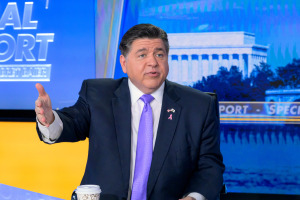
The governor said his staff, legislators and Bears representatives met Wednesday for three hours to discuss legislation that might be needed for the team to build a stadium in Arlington Heights.