The Indiana Senate Democrats Committee, the campaign arm of the Indiana Senate Democratic Caucus, is expected to announce its “Flip List” on Tuesday morning, and four of the five races on the list cover parts of Marion County.
The Indianapolis-based drugmaker said it will enroll about 2,400 residents and staff of nursing homes to test an antibody it is developing with a Canadian biotech. Nursing homes account for about 40% of U.S. deaths from COVID-19.
Eliminating federal assistance leaves the involuntarily unemployed reliant on state programs, which provide an average of only $350 a week. Who wants to see millions of Americans stuck in such dire financial straits?
What we knew before the pandemic, but now understand in new and meaningful ways, is the importance of partnerships, many of which have been nurtured over the span of years. Collaboration among all stakeholders and most importantly schools, will be essential in order to “reopen” Indiana’s schools and support our workforce economy in the most efficient and effective way.
The $300 million hotel will be the most expensive and elaborate new lodging project built in the city since the $450 million JW Marriott complex was completed in 2011. And it will compete directly with the JW.
The developers said they have the potential to manufacture up to 100 million vaccine doses by the end of this year and up to 1.3 billion doses by the end of 2021.
The city will not subsidize construction of Kite’s two hotels on the site but will ask the City-County Council to authorize a $150 million bond to finance an addition to the Indiana Convention Center.
The immigrant from Taiwan is deep in research and development for his new role as executive chef at Vivante, a French restaurant opening in Carmel’s luxurious Hotel Carmichael on Aug. 4.
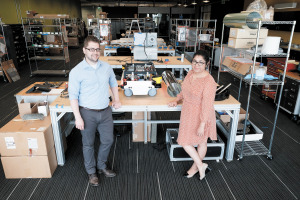
The skill sets of husband-and-wife duo Jason and Diana Brugh are as perfectly blended for the task they aim to accomplish as the abilities of the integrated robots they’re building to kill germs and fight coronavirus in the workplace. Diana Brugh is a microbiologist with experience in food science and working with bacteria- and virus-killing […]
The real estate investment firm handles 150-200 projects a year on behalf of other investors that are both local and out of state, meaning it coaches, consults and advises those investors on Indy-area properties.